

The term "bear market" refers to a period in which the whole stock market has a fall of at least 20%, measured by a broad index such as the Standard & Poor's 500 or the Nasdaq Composite. As a result of the fact that stock markets are prone to experiencing periodic drops of 5% or more, investors sometimes only notice that a bear market has begun once their losses have significantly beyond this threshold.
Investors might suffer long-term damage to their portfolios if they are paralyzed by indecision and unwilling to take remedial action due to the cumulative effects of past losses, heightened uncertainty about the future, and increasing market volatility.
Although higher prices have followed every bear market in history at some point, the recovery of many portfolios that bear markets have wiped out has been far slower, and others have never recovered. When it comes to investing, protecting your wealth should always be your priority, and a downturn in the market is the best example of why this is so important to keep in mind.
Dollar-Cost Average
If you consistently invest a certain amount in stocks, whether via a 401(k) or a Roth IRA, you will end up purchasing more shares when market prices go down and fewer shares when they go up, which will put the odds in your favor to a somewhat greater extent than they would be otherwise.
The advantages of contributing a certain amount consistently to a tax-favored savings plan are only enhanced by using the dollar-cost-averaging strategy. Contributions and employer matching usually contribute to two-thirds of the annual balance rise for 401(k) plans, while investment profits account for the remaining one-third of the increase. This shows that many people who contribute to 401(k) plans have the resources to swiftly recover their account balances after periods of poor market performance.
The number "many" does not, of course, imply "all," and aggregations mask important disparities that may be attributed, among other things, to the amount of the 401(k) balance. According to the findings of one research, account holders with more than $200,000 had more than 25% losses in 2008, but account holders with less than $10,000 saw their balances grow by 40% as donations more than offset investment losses.
Calibrate Risk
No amount of dollar-cost averaging will change the fact that employees with greater account balances have considerably more to lose in a bear market. Older plan members have less time to compensate for such losses before retirement. This is a reality that cannot be changed. And naturally, there is a significant overlap between these different groupings.
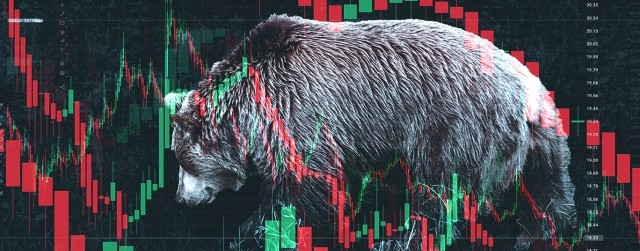
An investor getting close to retirement should take a far more cautious approach to a bear market than a younger worker with a lower account balance. This is because of the relationship between risk and return. Nevertheless, this is only sometimes the case. According to a survey conducted by Fidelity Investments on its retirement plan members as of the third quarter of 2021, Baby Boomers (those born between 1946 and 1964) were the generation most likely to have invested their money in an excessively risky manner. On the other hand, 51% of the plan members in the GenX generation, 70% of the Millennial generation, and 85% of the GenZ generation were fully invested in a target date fund.
Diversify Without Disengaging
During bear markets, growth equities are often punished more severely than value stocks. Even though they have a lower risk, equities with lesser risk have, over the long run, produced returns comparable to those of companies with a higher risk. Even if it is long overdue and takes place during a bear market, modest diversification into value companies for portfolios weighted toward speculative equities may pay dividends not only literally but also symbolically for a considerable amount of time after the bear market has ended.
A diverse portfolio should include cash as one of the components. Even if it doesn't produce a significant income, it represents a purchasing power reserve that may be swiftly mobilized to take advantage of possibilities presented by the bear market. However, suppose you move a sizeable portion of the funds in your retirement account into cash while the market is in a bear market. In that case, you will be faced with the unenviable task of determining whether or not to redeploy those funds and when and where to do so, or else you will see a reduction in your long-term returns.